
Some carriers, including UPS and FedEx may apply an Additional Handling Surcharge when a package is not packed in a standard way or cannot move safely and efficiently through the carrier’s automated sorting network.
This article covers packaging-related Additional Handling only. Separate charges may apply because of a package’s weight, dimensions, cubic volume, or oversize classification.
Most parcel networks are designed around rigid, rectangular packages that are completely enclosed in corrugated cardboard.
A package may require manual handling when its shape, material, wrapping, or external features prevent it from moving normally through conveyor and sorting equipment.
The surcharge may still apply when the package is strong enough to protect its contents. The issue is not limited to package strength; it also concerns compatibility with the carrier’s handling system.
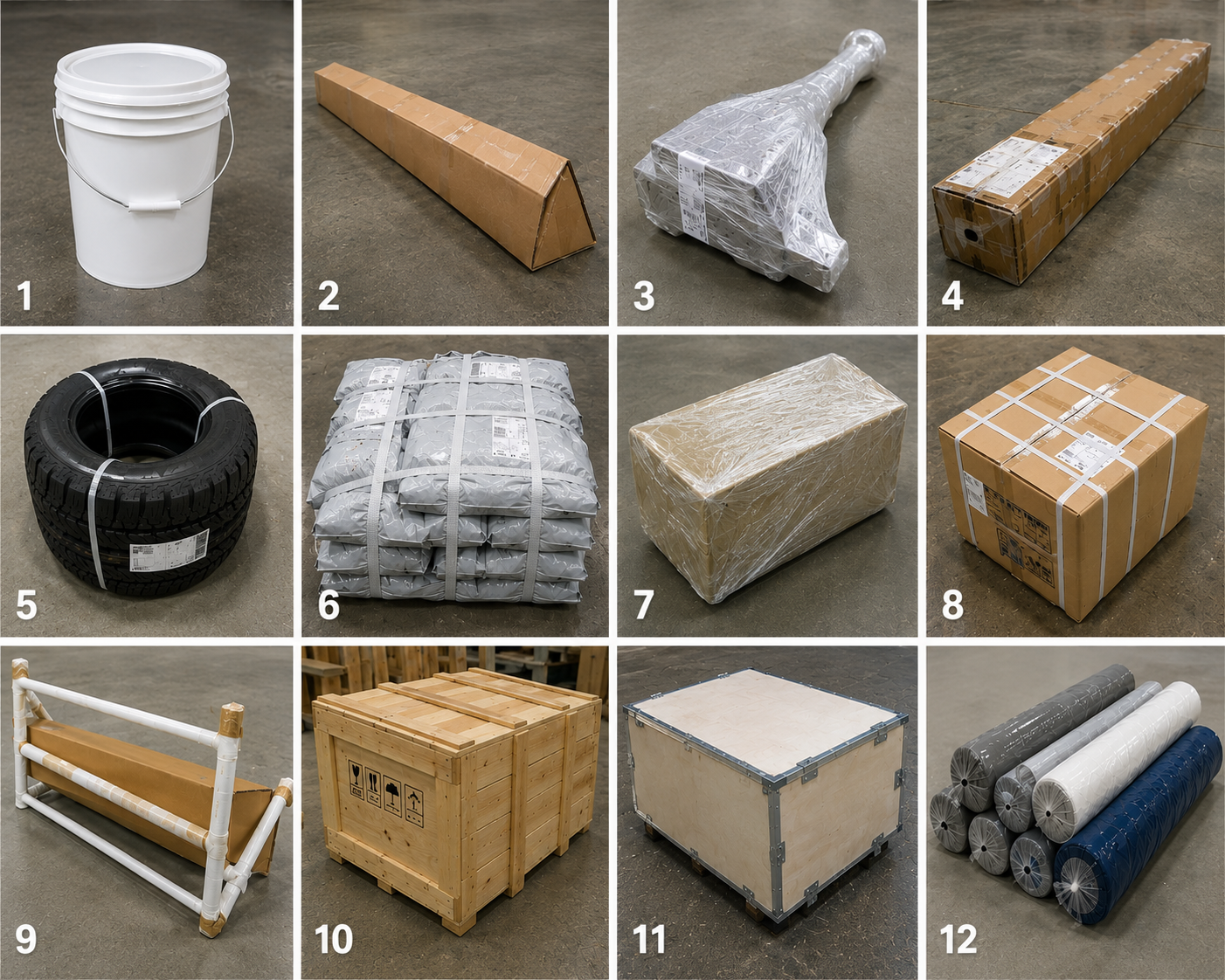
Examples that may be assessed for an AHS Surcharge
1. Plastic pail
Recommendation: Place the pail inside a properly sized corrugated carton with suitable internal cushioning.
2. Long triangular package
Recommendation: Use a rigid rectangular corrugated carton where practical and enter the final packed dimensions accurately.
3. Irregular item wrapped in plastic
Recommendation: Place the item inside a six-sided corrugated carton and use internal blocking or cushioning to prevent movement.
4. Long, heavily taped package
Recommendation: Use a correctly rated carton designed for long products. Avoid combining or extending smaller cartons unless the packaging is engineered for shipment.
5. Exposed tire
Recommendation: Fully enclose the tire in a suitable corrugated shipping container where permitted by the carrier.
6. Bundled soft packages
Recommendation: Place the individual packages inside one rigid corrugated master carton rather than strapping them together externally.
7. Stretch-wrapped parcel
Recommendation: Use a sealed corrugated carton as the external shipping surface. Do not use stretch-wrap as the parcel’s primary outer packaging.
8. Carton with external banding
Recommendation: Use suitable pressure-sensitive packing tape instead of external plastic, metal, or cloth straps.
9. Exposed frame or protruding components
Recommendation: Fully enclose the product in a rigid corrugated carton and use internal supports to prevent components from piercing the carton.
10. Wooden crate
Recommendation: Use an appropriately rated corrugated shipping carton where possible. Consider freight service when a wooden crate is necessary.
11. Reusable rigid shipping case
Recommendation: Place the case inside a corrugated overbox where practical, or use a freight service if the item is unsuitable for parcel handling.
12. Fabric or material rolls
Recommendation: Pack the rolls inside a rigid rectangular corrugated carton with end supports and internal blocking.
Important
The examples above are illustrative and are not an exhaustive list.
Carriers may assess Additional Handling when a package requires special manual handling, is incompatible with automated equipment, or does not meet their standard packaging requirements.
Packaging definitions, surcharge amounts, and charging rules vary by carrier, country, service, date, and customer agreement. The carrier’s current service guide and terms in effect on the shipment date take precedence.